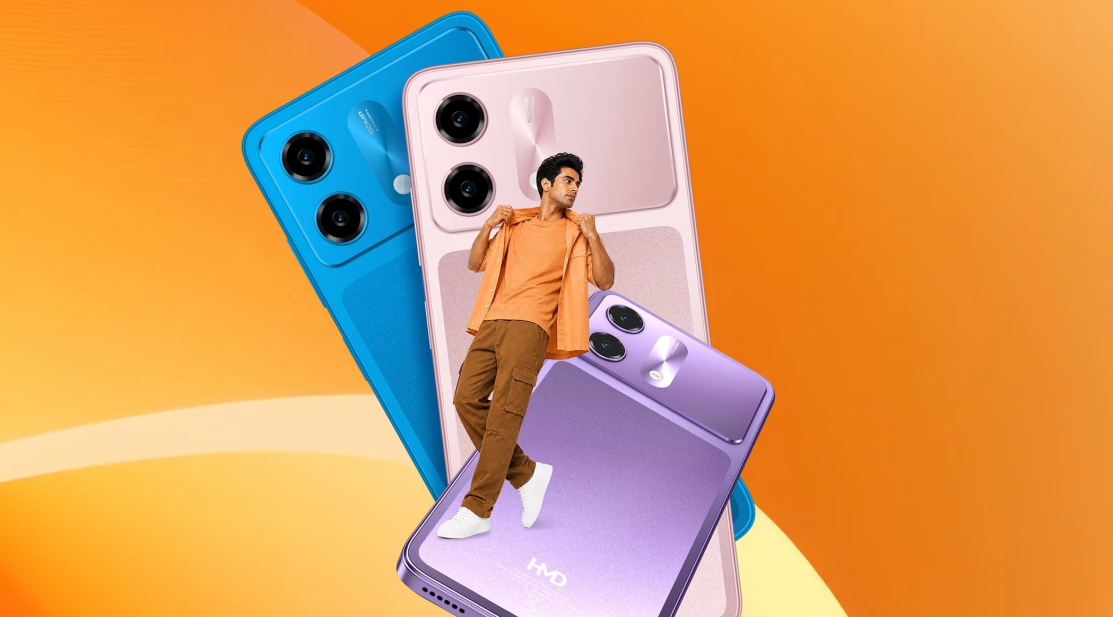

Finnish mobile phone manufacturer HMD has officially launched its latest smartphone, the Vibe 2 5G, in India. The device arrives with a unique feature that sets it apart from many competitors in the budget smartphone segment — it comes preloaded with Indus, an AI chatbot developed by Indian artificial intelligence startup Sarvam AI.
The launch marks the first major product release following the partnership announced by HMD and Sarvam AI during the India AI Summit held in New Delhi earlier this year. Both companies see the collaboration as an opportunity to bring localized AI experiences to millions of Indian consumers.
Indus AI Supports 22 Indian Languages
One of the biggest highlights of the new smartphone is the integration of the Indus chatbot. Powered by Sarvam AI’s locally trained 105-billion-parameter language model, the chatbot is designed specifically for Indian users.
Indus supports 22 Indic languages and offers advanced code-switching capabilities, allowing users to switch seamlessly between languages such as Hindi and English during conversations. This feature aims to make AI interactions more natural and accessible for India’s multilingual population.
Currently, the chatbot operates as a standalone application and does not support offline functionality. Users also cannot activate the AI assistant through dedicated hardware shortcuts or system-level integrations.
HMD’s Strategy to Expand AI Accessibility
According to Ravi Kunwar, CEO and Vice President of HMD for India and APAC, the primary goal of the partnership is to place the Indus chatbot directly into consumers’ hands.
By preloading the application on new devices, HMD hopes to increase awareness and usage of locally developed AI tools. The company plans to evaluate user engagement before introducing deeper AI integrations and additional features.
Kunwar also revealed that future smartphones in the Vibe series will include the chatbot. Additionally, HMD is working on integrating Sarvam AI technology into upcoming feature phones, potentially bringing AI capabilities to a much broader audience.
Affordable Hardware Meets Regional AI
The HMD Vibe 2 5G targets budget-conscious consumers with a competitive price of ₹10,999 (approximately $114). The device features a large 6,000mAh battery, making it appealing to users seeking long battery life alongside modern smartphone capabilities.
Industry observers believe the combination of affordable hardware and a regional AI assistant could help bridge the gap between advanced AI technologies and users who are less comfortable with English-language platforms.
The Challenge Ahead for Indus
Despite the excitement surrounding the launch, Indus faces significant competition from global AI platforms.
According to app analytics data, the Indus chatbot has recorded just over 293,000 downloads in India since its launch. In comparison, ChatGPT has achieved approximately 43.9 million downloads in the country during the same period.
While the gap is substantial, analysts note that pre-installation on smartphones and future feature phones could provide Indus with a valuable distribution channel that many AI startups lack.
Sarvam AI Continues Rapid Growth
Sarvam AI has emerged as one of India’s most prominent artificial intelligence startups. Beyond consumer applications, the company has built a strong presence in enterprise AI, particularly in voice-based solutions for businesses.
Reports suggest Sarvam AI is currently working on a major funding round worth approximately $300 million, potentially valuing the company at around $1.5 billion. If completed, the deal would make Sarvam one of the most highly valued AI startups in India.
Conclusion
The launch of the HMD Vibe 2 5G with Sarvam AI’s Indus chatbot represents a significant step toward localized AI adoption in India. By combining affordable smartphones with an AI assistant capable of understanding multiple Indian languages, HMD and Sarvam AI are betting on accessibility as a key driver of growth.
While Indus still trails global AI competitors in user numbers, its focus on regional languages and upcoming feature phone integration could help carve out a unique position in one of the world’s largest and most diverse technology markets.